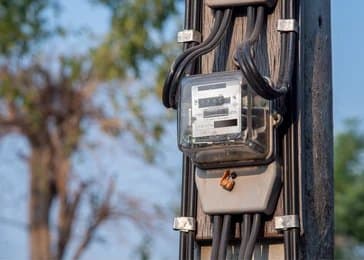
Installing an electricity meter is essential for every home or institution. In fact, the type of electricity meter varies depending on the establishment. There are two main types: single-phase and three-phase meters, each with its own distinct features and uses. In this comprehensive guide, we will discuss these differences and where each type of meter can be used.
Single-phase Meter
The single-phase meter is the most common type in homes and apartments with a little - medium electricity consumption. This meter operates on a single-phase system, meaning it receives only one power line in addition to the neutral line.
Single-phase Meter Features
Suitable for basic household appliances such as lighting, refrigerators, washing machines, and televisions.
Provides a stable voltage, typically 220–240 volts.
Lower price, installation, and maintenance costs compared to a three-phase meter.
Used when electricity consumption is low to moderate.
What is Neutral Line?
For a better understanding of how electricity meters work, we need to understand what a neutral line is. Simply, it's the wire that returns the electrical current to its primary source after passing through the devices. Its main function is to complete the electrical circuit and ensure a safe and stable return of power.
The neutral line works by allowing current to enter the device via the phase line. After the device is switched on, the current returns to the grid via the neutral line. This line is connected to ground at a point in the grid, which helps stabilize the voltage.
Neutral Line’s Role
The neutral line is one of the most important components of electricity meters because it performs several functions, including:
- Completing the electrical circuit so that current can circulate.
- Safely returning the backflow to the source.
- Maintaining voltage stability in the electrical grid.
- Reducing the risk of electric shock.
Three-phase Meter
Unlike a single-phase meter, a three-phase electricity meter is used in locations requiring higher electrical capacity. It operates on three electrical phases, which helps distribute the electrical load more effectively and increases available capacity. For this reason, it is suitable for businesses and institutions with larger electrical loads.
Three-phase Meter Features
- It provides higher voltage and greater stability when operating heavy equipment.
- It supports the operation of machinery, central air conditioning systems, elevators, and industrial equipment.
- It reduces the likelihood of power outages due to overloads.
- It typically operates at a voltage between 380 and 400 volts.
Single-phase Vs. Three-phase Meters
The main difference between the two meters lies in their ability to handle a specific voltage or electrical load, and how the electrical current is distributed within the building. Since a single-phase meter operates on only one phase, it is suitable for residential buildings and apartments that rely on relatively moderately rated electrical appliances. On the other hand, a three-phase meter operates on three phases, giving it the capacity to handle a larger electrical load and allowing it to provide the higher electrical power required by heavy equipment.
In terms of voltage, a single-phase meter provides a voltage ranging from 220 to 240 volts, while a three-phase meter offers a higher voltage of 380–400 volts, making it the better choice for locations that need to run central air conditioning, elevators, or high-power equipment. Distributing the load across three phases also reduces the likelihood of power outages due to overloading and provides greater efficiency in operating appliances.
There are also differences in accuracy (the meter's ability to measure electricity consumption without significant errors). A three-phase meter has an accuracy of 0.5 to 1 per second, while a single-phase meter has an accuracy of 1 per second.
Three-phase Meter | Single-phase Meter | Comparison Point |
380 - 400 volts | 220 - 240 volts | Voltage |
Medium to high | Low to medium | Electrical Load |
Factories and large shops | Houses | Uses |
High | Low | Load Distribution |
More stable | Less stable | Current Stability |
Higher maintenance cost | Lower maintenance cost | Cost |
1 per second | 0.5 – 1 per second | Accuracy |
How to Install an Electric Meter?
To install an electric meter, some steps should be done, including:
1.Applying to the electricity company
2.Submit the required documents:
-Property registration document
-Land plan
-Site planning
-Copy of applicant's ID
-Original copy of a valid occupancy permit
3.Pay the required fees
4.Schedule a meter installation appointment
5.Inspection and installation
6.Meter documentation
FAQs
1.What are the advantages of a 3-phase electricity meter?
The three-phase meter is characterized by providing higher voltage and greater stability when operating heavy equipment, which reduces power outages in case of increased loads.
2.What is a single-phase meter?
It is a meter used in houses and apartments that operates on a single-phase system, meaning it receives electricity from only one line.
3.What is the appropriate voltage for homes?
The appropriate voltage range for homes is 110-220, because the devices used require a relatively lower current.
4.What is the difference between a 220-volt and a 380-volt electricity meter?
In high-power situations, a 380-volt meter can handle electrical loads without causing damage or power outages, while a 220-volt meter cannot handle high electrical power.